The Awwww Factor: Why Things Feel Cute
An instinctive response that serves a purpose, triggered by specific features
The phenomenon of being cute is an interesting one. It lives at a subconscious level, essentially an instinctive response. It hits us without our thinking about it.
Why is there such a thing as cuteness
But why does cuteness exist at all? A widely accepted explanation is that cuteness exists because it helps human babies survive and thrive. It gives that extra push for adults to pay attention to young ones and support them as they grow. This is especially important for humans who have a long period of helplessness and require constant support and nurturing for years.
If we take a closer look at what makes something cute, a strong argument can be made that this is the only reason that we experience the feeling of cuteness. Nearly every bit of it can be traced back to features of a human baby.
Key elements of cuteness
The main cuteness triggers that have been identified are baby-related features or behaviors. This includes big eyes relative to head size, big head size relative to body size, uncoordinated movements, inability to talk or speak correctly, and helplessness. There are minor triggers as well, things like short limbs, especially with fat folds in the arms and legs, what presents as puffiness or softness. Even the vacant stare babies can sometimes have will evoke the feeling. For additional information on this, see Konrad Lorenz's work on Kindchenschema (baby schema).
For most people, as they mature, these features fade and by the time they are adults they have lost any semblance of cuteness. If everything was cute it would diminish the specialness of things that really need to be cute to help their survival.
The features that make a baby or toddler cute can also make babies of other species cute. Many baby animals are cuter than the adult version. Sometimes even cuter than baby humans. Kittens, puppies, even baby hippopotami, and this is due to the same visual and behavioral cues that human babies exhibit.
Most things are cute-neutral
Many animals and objects are neutral with respect to cuteness. A rock for example. But add a few cute features and they become cute. This has been a recurring theme in animated movies, for example Mrs. Potts' baby tea cup in Beauty and the Beast.
Even a completely inanimate object such as a doll, or stuffed animal can be cute.
Exaggerated features
Adding exaggerated features to something can enhance cuteness to a point. For example those paintings of children with giant eyes. But if overdone it risks becoming grotesque and losing the cute factor.
What kills cuteness
We have discussed features that cause cuteness, but what features do the opposite, make something not cute. One interesting observation is that there is not really an opposite to cuteness. No word really captures it, the opposite is simply the lack of cuteness.
What can cause a lack of cuteness? Other than the lack of any cute features, there are some other things.
If a creature appears to be dangerous then it is much harder to appear cute. As an example, a full grown adult tiger baring its fangs, brandishing claws is decidedly not cute. But a harmless tiger cub doing the exact same thing is very cute. It is the potential danger to the observer that matters. If humans were regularly attacked and actually hurt by juvenile kittens, I doubt we would find them cute. These feelings also hold true for fantasy creatures.
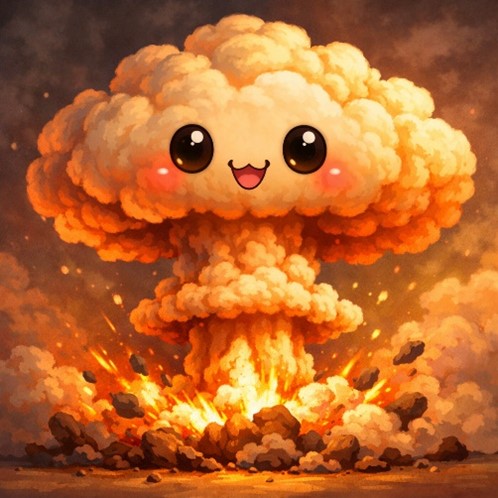
However, the idea is complicated. Simply putting large eyes, and a little smile on a mushroom cloud can make it appear cute. This little guy also has rounded puffy rolls which increases the effect.
Mixed signals
Sometimes we receive mixed signals. A case in point is the sphynx cat (the cat with no hair). On first seeing one they may not seem cute. But within a few seconds your brain realizes, yes actually this creature is cute. It is missing some of the traditional features of cuteness, but perhaps we fill in what we know about cats, all the other features, behaviors, even if not immediately apparent, and suddenly the cuteness feeling appears.
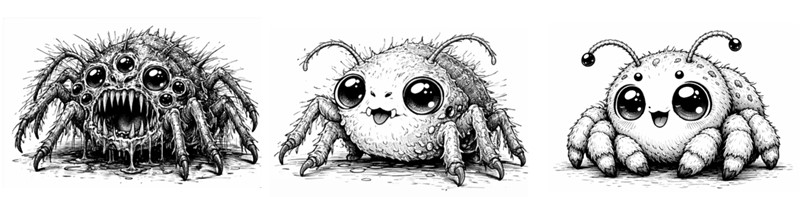
Other features that go against cuteness include being farther removed from human or mammalian features; a creature having completely alien features is harder to make cute. The sequence of images below illustrates this. Starting with a hideous bug, then add a more human face and softening the features makes it more neutral with respect to cuteness. Then take it further, going full soft, non threatening, we finally reach something that feels cute.
What do non humans think about cuteness?
The feeling of cuteness could very well be a singularly human experience and we can't really know what animals think about it. However something similar may be going on. Obviously animals, especially mammals, are aware that their own babies and young require special treatment. And anecdotal evidence suggests our pets sometimes treat our babies special when they arrive. But whether this is due to an appearance of cuteness, mimicking our behavior, or some other reason is not known.
Strange cases
There are times where features that are decidedly not cute come together to create an overall impression that feels cute. Examples are the ugliest dog or trolls.
There is also variation at the individual level about how each one of us perceives cuteness. An example many have experienced is the ugly baby syndrome. Most people believe their own babies are extremely cute regardless of what others may think.
Pulling it all together
So next time you feel the internal emotion of wow that thing is cute, take a minute to reflect on what and why you feel that way. Recognize this is occurring at a subconscious level and is directly tied to the development and survival of our species.
Related ideas:
We Really, Really Want to Be Right
You Learned About Your Five Senses, What About 6, 7, 8, and 9?