Small Words, Big Reaction
The power of swear words
A swear word, a single word, four letters, even three letters long, when uttered, can change everything. It can destroy a person's reputation, or get a room to roar with laughter. Their use is highly regulated, culturally and legally. Even children learn the strength of these words at an early age. I can still remember the taste of Dial soap in my mouth when I used some of those words. What causes the power that these words hold over us? How can something so small and simple have such a dramatic impact?
Because of the impact that swear words can have, I will avoid using any swear words in this article.
Collectively we have a love-hate relationship with swear words. You are taught not to use them, yet many adults use dozens of swear words a day. The number varies widely, some people swear in almost every sentence, while others almost never swear. One can only imagine how common swear use would be if we did not teach children not to use them.
What is a swear word
This article will focus on classic body-function and sexual profanity. Other objectionable words like religious profanity have lost some of their punch for many, at least in the U.S. Racial slurs are important, but are in some respects fundamentally different and will not be covered here. There are numerous words people would classify as swear words but George Carlin's famous "seven dirty words" remains a good fundamental list. Many others are related to these.
Changes over time
The very worst swear words have remained surprisingly constant over the last several decades. But that does not mean there has been no change. The use of swear words has become more commonplace in popular culture, especially in the unregulated internet.
However, on broadcast TV swearing is still highly regulated by the FCC. Even a single swear word use, described as a "fleeting expletive" can have legal implications. Networks have been fined or sanctioned because someone has blurted out a swear word. In the movie industry, dialogue will impact rating. Movie censors are very tuned in to swear word usage and count. It has been said that a single swear word may still be acceptable for a PG-13 rating but two can push a movie to R. This can have a significant financial impact since the total potential audience for an R-rated movie is lower. It is not unusual for the swear words to be carefully edited in order to secure a lower rating.
Different countries - different swear words
The impact of specific swear words can be highly local. What is a shocking word in one country could be a mild expletive in another. If an American English speaker is planning to spend some time in another English-speaking country, it might be wise to do a quick internet search to see which words to avoid.
Reflexive versus deliberate
Swearing can be reflexive, for example if you smash your thumb with a hammer you may scream out a swear word without thinking about it. On the other hand swearing can also be deliberate where the word is selected consciously. People adjust their swearing based on circumstances. Some of the worst offenders may never swear in front of their grandparents, or at work for example.
What is actually going on
So what really goes on when you hear a swear word. Part of the answer seems to be that swear words appear to be processed more emotionally than neutral words. That makes them hit differently when we hear them. Exactly how the word hits is highly individual and is not necessarily negative.
One interesting theory is that swearing initially substituted for violence, creating a harmless way to strike out, ironically making the swearers more civilized. So while hearing swearing may make some people uncomfortable, it may serve a purpose.
For a more detailed scientific overview of the subject, see the following reference: The power of swearing: What we know and what we don't - ScienceDirect
Context is important
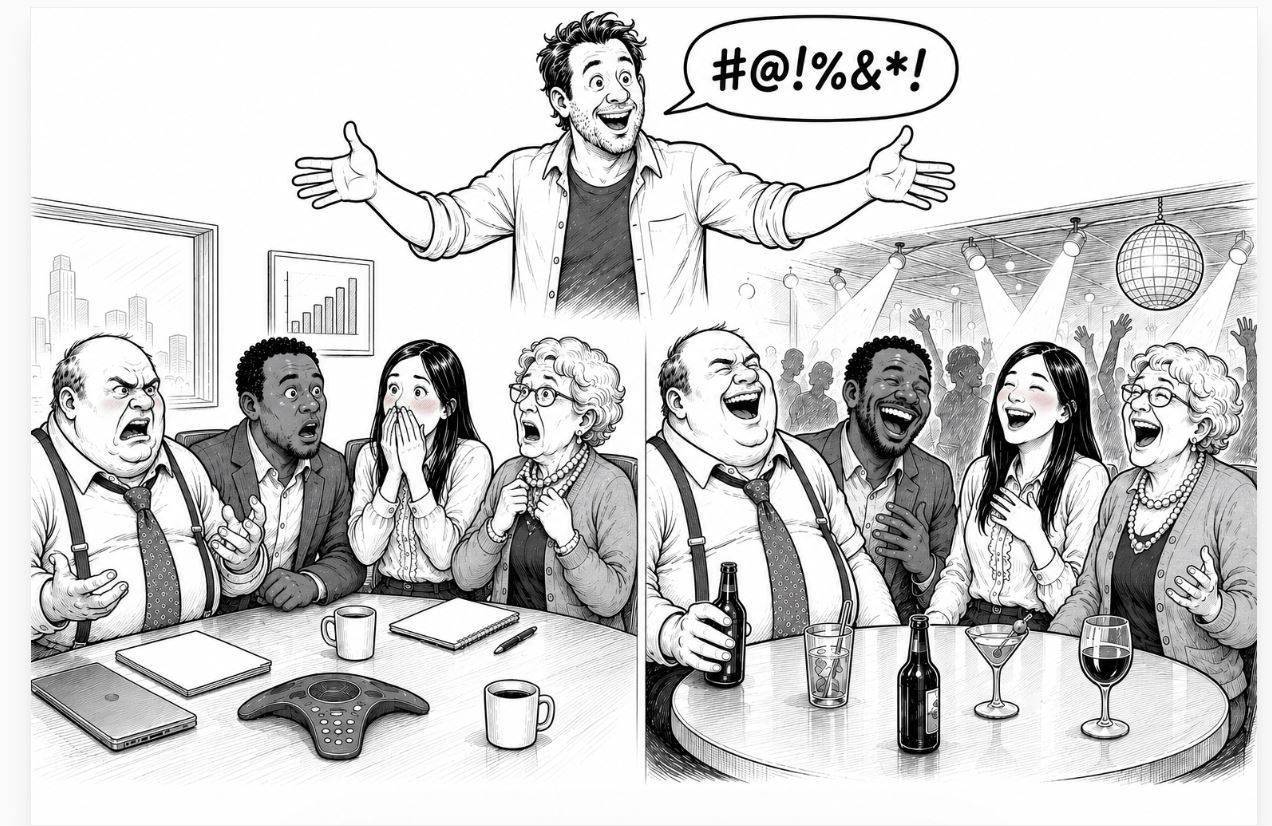
Swearing is rarely heard in most work environments. But swearing is often a big part of comedy, both movies and stand up. This shows how circumstances matter. In some environments, swearing becomes so common that the words do not carry the same weight. In those situations not using a swear word may actually cause people to listen more carefully.
"Almost swear words"
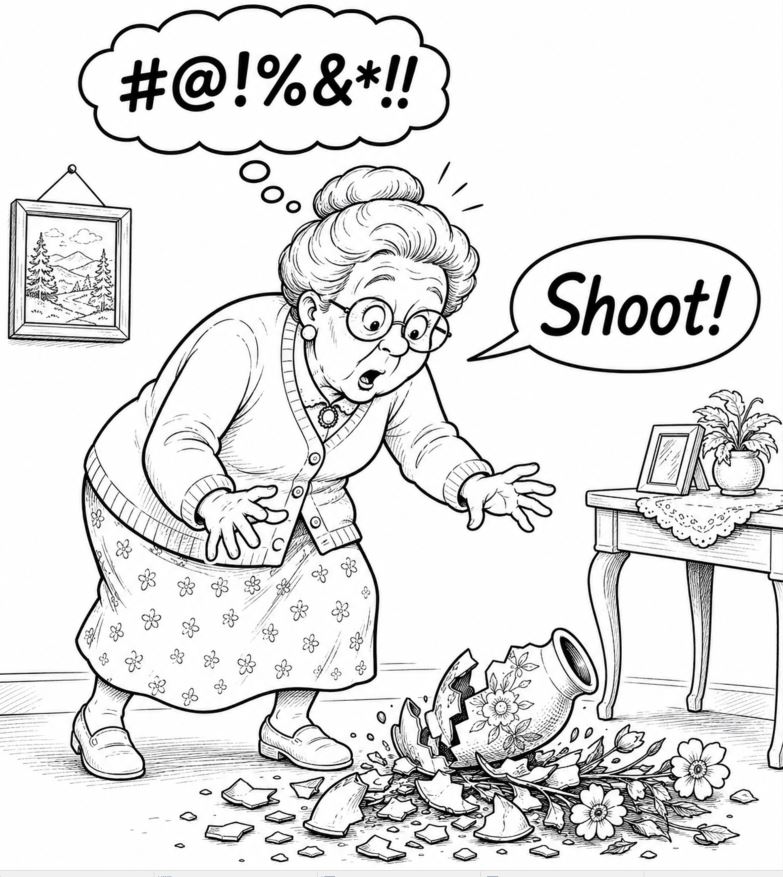
A strange aspect of this is the use of replacement words that stand in for the real thing. Even the most straight-laced people use words like darn, frick, shoot, and similar substitutes. Everyone knows exactly what they stand in for. In some cases that is almost the only reason the word exists. Yet these don't trigger the same emotional response as the actual swear word. It suggests that the taboo is not only in the meaning, but also in the specific word itself.
Words are more than words
A swear word may be only a few letters long. It may not mean anything cosmically important. But cultural rules are real, and violating them has consequences. There may be good reasons swearing exists, and perhaps our parents didn't explain all this to us, but they knew something important. Sometimes words are more than just words.
Related ideas:
We Really, Really Want to Be Right
The Awwww Factor: Why Things Feel Cute